Three Karnataka police officials suspended over delays in investigating the mob lynching of Kerala man Ashraf in Mangaluru. Public outcry, political backlash, and human rights concerns rise.
Article Body
Breaking News: Ashraf Lynching Fallout — Three Police Officers Suspended as Public Outrage Mounts in Mangaluru
In a dramatic turn of events that has rocked the coastal city of Mangaluru, Karnataka, three senior police officials have been suspended over alleged lapses in the investigation into the brutal mob lynching of 42-year-old Mohammed Ashraf, a Kerala native, during a local cricket match in the Talapady region. The incident, which occurred last weekend, has triggered a political firestorm, community outrage, and demands for justice from rights groups across southern India.
Ashraf Lynching: 3 Police Officers Suspended Amid Mangaluru Mob Murder Investigation
The Incident: Cricket Turns Into Chaos
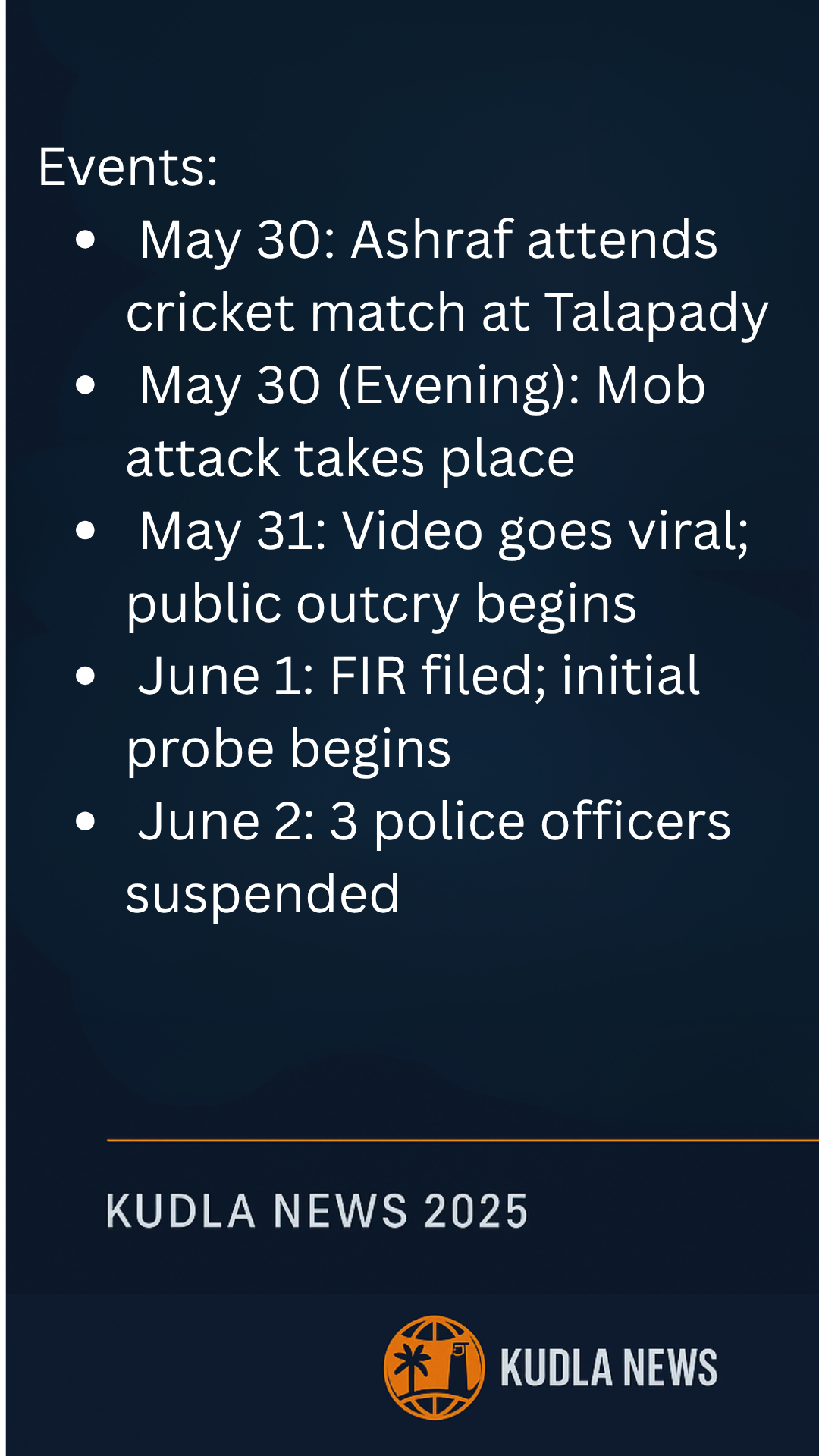
According to eyewitness accounts, Ashraf was allegedly mistaken for a child kidnapper while watching a youth cricket match near the Karnataka-Kerala border. A scuffle broke out when locals claimed he was behaving suspiciously. Within minutes, the situation spiraled out of control as a mob, incited by unverified WhatsApp forwards and panic-driven rumors, descended upon Ashraf and assaulted him brutally.
He succumbed to his injuries before medical aid could be provided. A video clip showing parts of the assault later went viral, further inflaming public sentiment.
The Investigation: Delays and Deflections
It wasn’t until four days later that police officially registered a case of mob lynching. By then, vital CCTV footage was lost, social media posts had been deleted, and multiple suspects had fled the region.
The suspended officials — Mangaluru Rural Police Inspector Shivakumar, Head Constable Ramdas, and Assistant Sub-Inspector Latha — reportedly failed to act on initial alerts from local residents and hesitated to file a First Information Report (FIR) under appropriate charges, despite mounting pressure from Ashraf’s family and human rights organizations.
A senior Home Department official, speaking on condition of anonymity, confirmed the suspensions late Thursday evening. “The department is taking this lapse seriously. An internal inquiry has been launched to ascertain why there was a delay in treating this as a hate-driven lynching case,” the official stated.
Public Reaction: “Justice Delayed is Justice Denied”
The case has quickly snowballed into a political flashpoint.
Opposition leader and former Karnataka Chief Minister Siddaramaiah visited Ashraf’s family in Kasaragod and demanded a judicial probe. “This is not just about one man. This is about a systemic failure to protect minorities and prevent mob justice. We want answers, not apologies,” he told reporters.
Several civil society groups, including the All India Muslim Council and South India Human Rights Network, staged candlelight vigils across Mangaluru and Kasaragod, calling for fast-tracked prosecution and digital forensics on the viral video clips.
The Kerala State Government has also stepped in, with CM Pinarayi Vijayan issuing a statement urging Karnataka authorities to ensure "full cooperation and transparency" in delivering justice for their slain citizen.
Legal Developments: Lynching Charges, Digital Trails
The case has now been re-registered under sections related to murder, rioting, and criminal conspiracy. Karnataka’s CID Cyber Cell is assisting in retrieving deleted online content to track instigators of the violence. Authorities are also probing whether Ashraf’s murder was premeditated or opportunistic.
An FIR has been filed against at least 15 unnamed individuals, with police confirming that five suspects have already been detained based on visual identification and mobile phone geo-location data.
The National Human Rights Commission (NHRC) has also taken suo motu cognizance of the case and issued notices to the Karnataka DGP and Mangaluru Police Commissioner.
The Bigger Picture: A Pattern of Vigilante Violence?
This is not the first time Mangaluru has seen communal tensions erupt into mob justice. In 2022, a similar incident involving the public beating of two migrant laborers over cattle theft allegations had drawn criticism from Amnesty India and Human Rights Watch.
Experts warn that increasing reliance on social media forwards, combined with deepening communal divides, is fueling an environment ripe for misinformation-driven violence.
“This is not merely a policing issue. This is a social rot that is being normalized,” said Dr. Jyotsna Naik, a sociologist at St. Aloysius College. “We are seeing the judiciary and law enforcement react, rather than proactively prevent such tragedies.”
What’s Next: Calls for Reforms
Civil liberties lawyers are urging the Karnataka government to enact a state-level anti-lynching law, on the lines of the “Manav Suraksha Kanoon” proposed at the national level.
Meanwhile, digital rights activists have demanded stricter mechanisms to trace and penalize those spreading inflammatory content via private groups on encrypted platforms like WhatsApp and Telegram.
Conclusion: A City on Edge, A Family in Mourning
As Ashraf’s family prepares to bury their loved one, the Mangaluru district finds itself at a moral crossroads — between justice and negligence, accountability and apathy. Whether the suspension of three officers marks the beginning of reform or remains a performative act remains to be seen.
Comments